
The first-ever South African marriage certificate with an entry of ‘Muslim marriage’ was issued to a couple whose Nikah (Muslim marriage) was performed at Cravenby Estate in the Western Cape earlier this month, the Al Jama-ah Party said.
This comes as the Department of Home Affairs (DHA) confirmed it had issued the first South African marriage certificates officially recognising the “type of marriage” as “Muslim”.
“After changes made to the Department’s internal systems, Home Affairs has granted the first batch of 33 marriage certificates for Muslim marriages for the first time in South African history,” the department said in a statement.
“Members of the Islamic faith community have made extraordinary contributions to South Africa’s history for more than 350 years,” Home Affairs Minister Leon Schreiber said.
“While it comes hundreds of years later than it should have, it is a personal honour for me to preside as Minister over the granting of marriage certificates recognising Muslim marriages.”
Schreiber said this marked a significant step towards enhancing the dignity of this faith community, and reflects the ongoing commitment of Home Affairs to deliver dignity to all their clients. “It is also an expression of nation building, and a celebration of South Africa’s unity in diversity.”
Al Jama-ah said although it has been a long wait for a Muslim marriage certificate in line with Islamic Shari’ah Law, the party commended the DHA.
“Muslim couples can now register their marriages with a valid Nikah certificate with the DHA, and the marriage will be registered on the National Population Register and the couples will receive a South African Muslim marriage certificate,” the party said in a statement.
“The marriages of Muslims has never been recognised in South Africa – despite more than 350 years of Islam in the country – by both the former apartheid government and the new dispensation.”
The party said it has set a target of reaching one million Muslims to get a valid South African Muslim marriage certificate.

South African Muslim Marriage Certificates can now be issued for Muslim Marriage Couples
WHAT YOU NEED TO KNOW:
- Both wife and husband to be present and consent to be married to each other under the Muslim marriage
- Copies of ID documents/ID cards/ Affidavit
- Two representatives need to be present, one from each family, with certified copies of their IDs and a sworn declaration/affidavit from the SAPS from each one confirming full details of the marriage celebration and their attendance. The couple must state the Dowry agreement in their affidavit. A Sharia law marriage certificate, commonly known as a (Nikah certificate), must be submitted for marriage registration.
- If one of the spouses is deceased, the surviving spouse must submit a sworn affidavit, as well as a sworn affidavit by a family member who witnessed the marriage (preferably from the deceased family).
- The issue of a marriage certificate costs R 20.00 after registration, which can take 3-5 working days.
- If one of the spouses is deceased, the applicant needs to apply for an unabridged marriage certificate with a fee of R75.00 payable
Should you need any assistance – CALL : HOTLINE NUMBER +27 (21) 023 4425
REQUIREMENTS:
- When visiting Home Affairs please take along your Nikah Certificate
and ID/Affidavit of both the husband and wife
- Both you and your spouse must be present
WHERE CAN I GET HELP:
- Advisory Desk 1: Home Affairs, 2 Maynard Mall, 70 Main Road, Wynberg
- Advisory Desk 2: Home Affairs: Alpha Street, Beacon Valley, Mitchells Plain
- Oversight Desk: Harrison Street, Johannesburg
- Oversight Desk: Umgeni Road, Durban
Should you need any assistance – CALL : HOTLINE NUMBER +27 (21) 023 4425
SEE UPDATED CERTIFICATE NOTIFYING HOME AFFAIRS OF CHANGES TO THE REGISTRATION OF MUSLIM MARRIAGES – OCTOBER 2024 <
CLICK HERE TO LEARN ABOUT THE MUSLIM MARRIAGE BILL


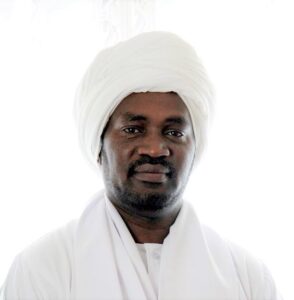 From the very early period soon after the collapse of the Khilafah (caliphate), Muslims have misunderstood Shari’ah; this may be attributed to rule of brutal regimes (with a few exceptions) different parts of the Muslim world
The rational of Al-Khilafah Al Rashida (righteous caliphate) started from the Prophet’s (s) time, and it ended with the death of ‘Ali ibn Abi Talib (r). When the Umawi dynasty ushered in their reign soon after, the era of political despotism in Islamic history was initiated. Through the course of history, many tyrannical governments reigned the Muslim world; they imposed certain aspects of Islamic law. In the process, these regimes ignored many other important aspects of Islam, such as justice, freedom, and rights. This selective approach continued over the centuries.
In contemporary Arab states, the dictatorial governments (with a very few exceptions) forced religious authorities to portray Islam in a particular manner; they did so as they interpreted it and not as Islam should be comprehended as a ‘way of life’. These religious authorities, in fact, played a key role in legitimising the tyrannical regimes’ rule. Being on the autocratic rulers’ payroll, these shuyukh turned a blind eye to the looting of resources in the Muslim world. The world witnessed the emergence of political elites, family monopolies, and military cartels that took advantage of their countries’ resources, while the majority of their societies are left living in abject poverty and ignorance.
Considering these happenings in the Muslim world and when reflecting on the status of Islamic law (Shari’ah), none of the Muslim societies can refer to the three major imperatives (namely, freedom, rights, and justice); concepts that give true meaning and sense to the word Shari’ah. The first of the three is: freedom; it word means that an individual exercises his/her free will to determine his/her own choices in life, including to be Muslim or not.
For this reason, Islam lifts the burden of responsibility from the minor, the insane, and the one sleeping, let alone the one who is in captivity or whose freedom is usurped. No person is accepted into the fold of Islam ‘as the right way of life’ without being ‘free to choose.’ This concept is thus one of the key imperatives of Shari’ah. The difference, however, between freedom in Islam and freedom in the Western secular systems is that there are boundaries; for if everyone is to exercise absolute freedoms, then we will end up trespassing other people’s rights. In this regard, Islam puts a limit to individual freedoms lest he/she infringes on the societal ‘common good.’
The second imperative is justice. Islam considers ‘justice’ as an absolute value and is critical to societal prosperity, peace and safety. The Qura’nic verse that talks about justice is amazing! “O you who have believed, be persistently standing firm in justice, witnesses for Allah, even if it be against yourselves or parents and relatives. Whether one is rich or poor, Allah is more worthy of both. So follow not [personal] inclination, lest you not be just. And if you distort [your testimony] or refuse [to give it], then indeed Allah is ever, with what you do, Acquainted.” [Quran 4:135].
The third imperative is the fulfilment of ‘rights;’ not only the rights of people, but also the rights of animals and all other creatures. Khaliph Omar (r) said: “If a mule in Baghdad stumbled on the road, I know Allah will ask me for it because I did pave the road for it.” Justice means that all citizens in the state must be equal before the law, and nobody is above the law, no matter what position they occupy in society.
The third imperative is the issue of ‘rights.’ Whatever is right by nature must be fulfilled, meaning that the state should fulfil its obligations towards all the citizens; and the citizens should fulfil their obligations towards the state. So, these are three significant imperatives without which one cannot talk when discussing Islam in relation to the state.
Shari’ah organises society, in terms of relationships, rights, obligations, and social interactions. In a nutshell, the reference is to mu’amalat (that is, transactions). In other words, Shari’ah considers society as its central focus and any Muslim government is considered but a servant of society; it is subject to checks and balances without any sacredness associated with it. A ruler is thus subject and open to criticism; so, questioning his(/her) rule if need be and this even includes a possible dismissal from office.
The responsibility of the state in Islam is not to ‘propagate’ Islam, for this is the role of society. The state’s responsibility is to maintain safety, apply justice, and fulfil its obligations to all its citizens; especially in the way the citizens want. In other words, the state acts according to the will of society, not the will of an elite, be it military, familial, or political.
There is a lot of talk these days about Islam in the context of the state among the Muslim jurists. The version of Islam, however, portrayed by repressive regimes remains a dominant force; this is in the mindset of many Muslims and non-Muslims. So, when we talk about Shari’ah, we do not converse about ‘hudud’ (penal laws), we talk about the organisation of society at large in everything pertaining to their life.
(written by Shaykh Ramadan Ahmed Birima, Executive Director of Verulam Islamic Institute.)

AS we mark the final days of the ‘Id-al-Adha (a day of sacrifice); a day which enjoys special meaning because it symbolizes ‘sacrifice’ in the full sense of the word. It marks the climax of the Muslim pilgrimage known as Hajj. For Muslims it is the fifth pillar of Islam that tangibly binds the three Abrahamic religious traditions. Because of its socio-spiritual significance, it is an obligatory act for all Muslims (male and female); only those are physically and financially able should perform this sacred ritual, at least, once in their lifetime.
Considering the fact that this pilgrimage is reaching its climax on the day of ‘Arafat, we ask the questions: What have we – as a Party – accomplish legally? How have we have fared politically? And in which way have we contributed to our nation socially? In responding to these, we – as proudly South African political Party – can say that we managed to socially ring-fence more than sixty villages across the country where we hope to make demonstrable changes through setting up small agricultural industries.
Politically, the Party has punched above its weight with the appointment of two of its counsellors – the one succeeding the other – as the City of Johannesburg’s Executive Mayor. And on the legal front, the Party’s hard work paid off. It set in motion the Private Members Bill (PMB) with the sole intention of returning the dignity to all our country’s women folk.
While it succeeded to amend the respective Maintenance and Divorce Acts, it also pushed the government to give due recognition to the Muslim marriage institution. Honourable MP, Mogamat Ganief Hendricks with his team made sure that government acknowledged the need to address these matters; and we thankful that they did. So, the Party did this not only for the Muslim community but for our nation.
But it should be recalled that while the Party was busy on different fronts, it has on its mind the 2024 national elections. It wanted to prove to the nation that it can undertake tasks and deliver them; it can channel its energies to serve all communities; and it can dedicate its times to address critical issues that affects all.
Factoring in these developments and looking ahead to 2024, AL JAMA-AH’s CEO Prof Muhammed Haron has released the Party’s election promise; one that specifically appeals to Muslims (along with others) to come out in their numbers on the day of the national elections in July 2024 to cast their vote for the Party; a Party that is here as a committed political stakeholder that wished to help the government to take the socio-political turn.
This year our Party celebrated its 16th birthday; a celebration that followed challenging issues and arduous years to gain a seat in the National Parliament, the highest tier of government. The Party made history when it became the first Muslim political party to secure its seat in Parliament during 2019. This achievement by its leader Hon Hendricks is tangible testimony of his sacrifices; for he had complete trust in the Almighty for having granted him the stamina and courage to persevere despite many odds that were stacked against him.
So, when he got the parliamentary seat on Muslim votes, it was indeed a highpoint; it was an achievement not only for Al Jama-ah but it was also the case for the Muslim community. Now even though many Muslim theological bodies and organizations do not wish to openly demonstrate their support and interest in the Party’s manifesto and activities, it too was a victory for them.
Thus far Hon Hendricks’ first term in Parliament demonstrated that he did not only set himself several major goals but he made certain that he accomplishes many of them as he adjusted to his position as MP; and, indeed, he did! At this point in time, the Party may rightfully boast that he delivered much more than that of other political parties that served more than one term.
On the question of achievement, allow one to return to the PMB that he generated as an example of his dedication to bringing about changes on the legal front. Since 2019, he steered the Party along a challenging course. He helped to realise the 2019 Election Manifesto mandate from its Muslim constituency to fight for the Muslim marriage’s (that is, the Nikah) recognition; a social institution that was performed in accordance with the rules of Shari’ah. Historically, the nikah was not given any form of recognition by the successive colonial, apartheid, and democratic governments. Each of them denied the Muslims their rights even though the Muslims – as a religious minority – formed an integral part of these societies over the centuries.
Their discriminatory policies caused much suffering for the Muslim women and their children; the battery of legislation that each of these governmental systems enacted literally and figuratively deprived them of their fundamental rights; this was either in respect of the estate of the late spouse or in the case where the annulment of the marriage (divorce: talaq) could not be proved. The negative outcome of these resulted in the women including their children to be destitute, homeless, and penniless.
Setting these aside and as the Party faces the future, its leadership is of the belief that should more Muslims vote for it in the 2024 national elections, then it has the potential to increase its representation in Parliament by more than one seat. But despite only having one seat in Parliament at present, Hon Hendricks has been a champion on various fronts in Parliament.
He, for example, showed a keen interest in small business development projects to get our deprived communities out of poverty and joblessness; he thus touched base with village communities to bring about the necessary transformation in the rural areas. And another example where he has made an impact as the Party’s leader is in the socio-legal sector; herein, he championed the cause of the country’s women. He has, in fact, vociferously argued for women’s rights and for the socio-economic rights of all communities.
Being the Party’s only MP, he realized the power he had in Parliament and the opportunities that came his way to make changes. Since the PMB (in this case, the Muslim Marriage Bill) opened up legal pathways, he sought the support and assistance of different groups. He reached out to designated advocates from Parliament’s Legislative Drafting Team, the financial support from the Speaker of Parliament and Al Jama-ah’s legal research team headed by Advocate Yusuf Khan Dalwai, the Party’s National Working Committee and its National Executive Committee; together all of them contributed to the Party’s ability to effect change; their collective sacrifices turned into a victory for the Muslim community in particular and the nation as a whole.
It fortuitously happened that during this sacred month of pilgrimage, the Minister in The Presidency Khumbudzo Ntshavheni announced on the 21st of June 2023 that Cabinet approved Al Jama-ah’s four amendments to the Divorce Act of 1997. The first amendment spelt out the definition of Shariah: “A marriage concluded in accordance with Islamic Law, that is, Shariah, which regulates all public and private behaviour as derived from traditional customs (Al-Urf), the two primary sources, namely, the Quran and Sunnah (Prophetic model) and that uses juristic tools such as ijma (the consensus) of Muslim Jurists and the individual jurist’s qiyas (analogical deductions) to issue legal edicts.” The approval of Al Jama-ah’s amendments to the Divorce Act of 1997 is a socio-legal game changer to say the least.
Hon Hendricks who is committed citizen has always laid stress on the relevance and importance of Shariah that complements in many ways the country’s Constitution; the reason for this is that Shari’ah, like the Constitution, puts great emphasis on Freedom, Justice, and Rights. And with this in mind, Hon. Hendricks and Al Jama-ah want to ensure that the Muslim women in particular and the nation’s women in general are given their dignity to righting the legal wrongs. Worded differently, using the legal channels to show them respect and to return them their rights!
AL JAMA-AH WISHES ALL MUSLIMS ‘ID-AL-ADHA MUBARAK!


